
A New Website Costs What?!
Originally posted 2/14/2024 | Updated 3/15/2026
Let's just say it: website pricing is a mess.
You ask three different people what a website costs and you get three wildly different answers. One person says she built hers for $300. Your colleague just got quoted $15,000 from an agency. Someone in a Facebook group is offering to "do it for free if you let me use it in my portfolio." And now you're sitting here wondering if you're about to get ripped off or if you've been dramatically underinvesting this whole time.
Here's the truth: all of those numbers can be correct. The range is real. What varies is what you're actually getting — and whether it matches what your business actually needs right now.
This guide is going to cut through the noise and give you a straight answer on what websites cost for coaches and consultants in 2026, what drives those prices, and how to make a decision you won't regret six months later.
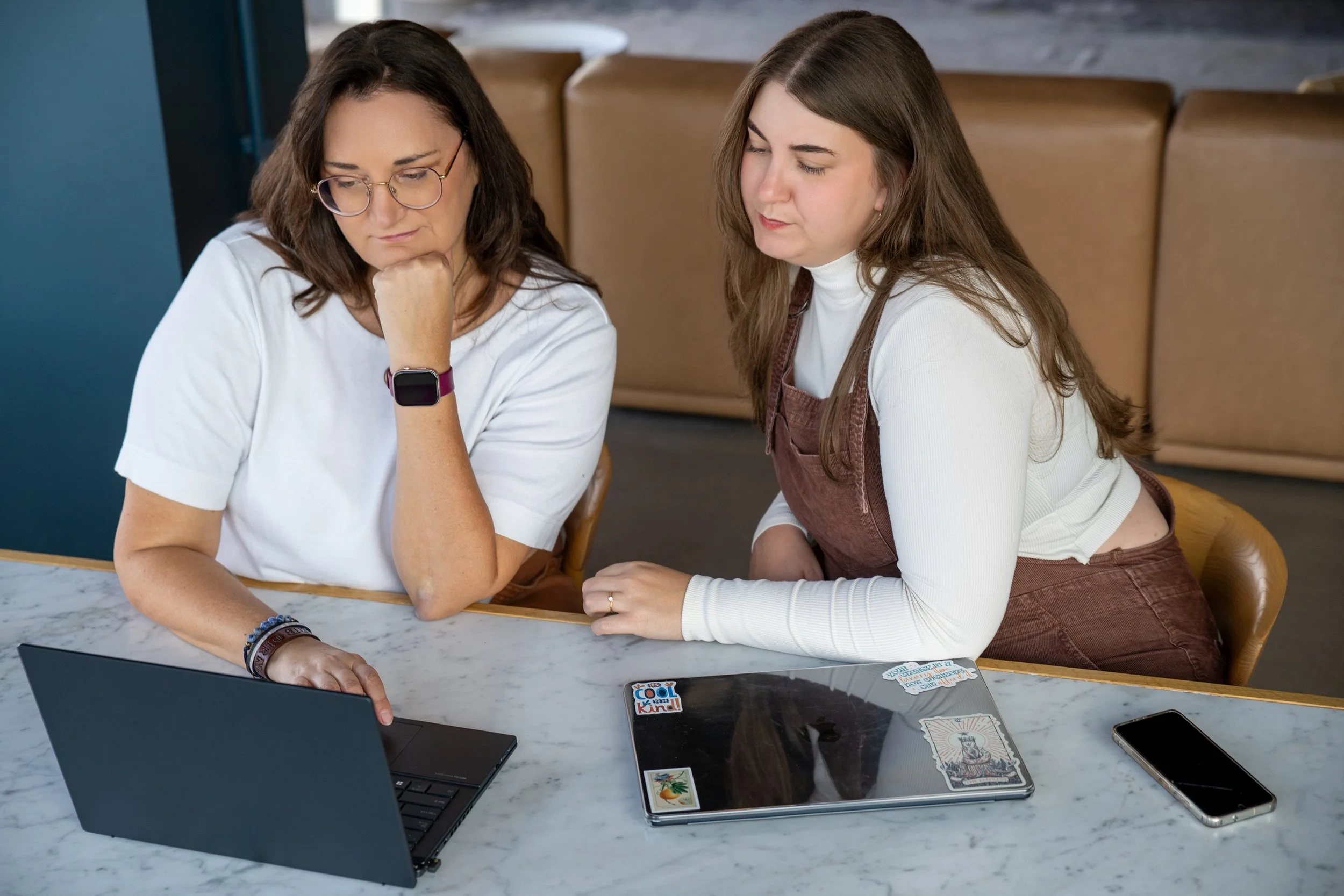
Cari Kaufman and Alex Andrews of Storyteller Wordsmith reviewing a website together — the kind of focused audit that happens before any build begins.
The Three Tiers of Website Investment
There are essentially three categories a coaching or consulting website falls into. Where you land depends on where you are in your business, what you need your site to do, and how much of the work you're willing and able to do yourself.
Tier 1: DIY — $300 to $1,500/year
This is you, a Squarespace or similar template, and a free weekend. The platform subscription runs $192–$468/year depending on your plan. Add a domain ($15–$20/year) and maybe a premium template ($100–$300 one-time) and you're in business — technically.
The upside: you control it, you can edit it, and you don't need a developer for every small change. The downside: you're spending time you probably don't have, and most DIY sites quietly communicate "I'm still figuring this out" to the people you most want to impress. If you're pre-revenue and testing your concept, this is a reasonable starting point. If you're charging premium rates, your site needs to match.
Tier 2: Template-Based Professional Build — $1,500 to $5,000
This is what most coaches and consultants actually need, especially in the early-to-mid growth phase. A skilled designer works within a platform like Squarespace, customizes it to your brand, writes or refines your copy, and hands you back something that looks custom without the custom price tag.
At Storyteller Wordsmith, this is the sweet spot where we spend most of our time — and the reason we built our Launch Bootcamp around it. We can take you from blank page to a live, conversion-ready five-page site in a single weekend, because we're not rebuilding the wheel every time. We're building on a solid foundation that we know works.
Tier 3: Custom Design and Development — $5,000 to $25,000+
Fully bespoke design, complex functionality, custom integrations, course platforms, membership areas, multi-funnel builds. This is for businesses with complex needs, significant revenue already coming in, and a clear picture of exactly what they need the site to do. If you're here and don't meet those criteria — if you're buying Tier 3 because you think it will make you Tier 3 — that's where people get into trouble.
A $15,000 website does not generate $15,000 worth of clients on its own. Your story, your offer, and your messaging do that. The website is where that story lives.
What's Actually Driving the Price?
When you get a quote that seems high (or suspiciously low), here's what to look at:
Strategy and messaging. Does the person building your site understand your business, your audience, and what your site needs to say before they touch the design? This is the work that most cheap builds skip — and it's why a lot of $2,000 websites don't convert. You end up with something that looks fine but doesn't actually do anything.
Copywriting. Words cost money. If a quote includes copy — actual written content for your pages — that's a significant portion of the budget and it should be. If a quote doesn't mention copy at all, you need to ask who's writing it, because blank design blocks don't sell coaching packages.
Platform and maintenance. A custom-coded site might look gorgeous and cost $20,000 to build — but if you can't edit it yourself, you're paying your developer every time you need to change a headline. This is one of the reasons we're vocal about building on platforms like Squarespace: we want you to be able to run your own site after we hand it over. We wrote a whole post about what happens when developers get too fancy with this.
Timeline. Need it in two weeks? Expect to pay a rush premium. Give a designer 6–8 weeks and a clear brief, and you'll get more for your money.
Ongoing costs. Whatever you spend to build the site is only part of the picture. Budget for your platform subscription ($200–$600/year for Squarespace), your domain ($15–$20/year), and any integrations like email marketing tools, booking software, or course platforms. These aren't surprises — they're just the cost of having a site that works.
The Question Nobody Asks (But Should)
Most coaches and consultants ask "how much does a website cost?" before they ask "what do I need my website to do?"
Those are different questions, and the second one is the one that actually determines the answer to the first.
A website for a coach who's building an email list and booking discovery calls needs different things than one for a consultant launching a group program or selling a high-ticket retainer. A site that needs to tell your brand story and drive one clear action is a different build from one that needs to sell three different offers to three different audiences.
Before you get a single quote, get clear on:
What is the one thing you want someone to do when they land on your site?
What story does your site need to tell to make them want to do it?
What do you need to be able to update yourself, and how often?
If you can answer those three questions, you'll be able to evaluate any quote you receive with a lot more clarity — and you'll stop comparing apples to motorcycles.
How to Choose Who Builds It
Price is not the most important factor. Neither is portfolio aesthetics, though that matters. What you're actually looking for is someone who asks good questions before they start talking about design.
A web designer who leads with "what colors do you like?" is not the same as one who leads with "who is this site for and what do you need them to believe by the time they leave?" One of those conversations produces a website that looks nice. The other produces one that works.
Ask any potential partner: How do you handle messaging and copy? If they look blank or say "that's your job," factor that into your decision. Great design wrapped around unclear messaging is just a pretty problem.
And regardless of who you work with — make sure you can actually edit the site once it's yours. Ask how you make basic updates. Ask what happens if you need to change your headline at 10pm on a Tuesday. The answer should not involve a developer ticket.
What This Looks Like With Us
Our Done For You website services are built for coaches and consultants who are past the DIY phase and ready for something that actually reflects the quality of their work.
We start with story and messaging — because a site that doesn't know what it's trying to say can't convert, no matter how good it looks. Then we build on Squarespace, which means you get a beautiful, conversion-focused site you can actually manage yourself. No developer dependency. No locked-out backend. No calling us every time you need to update your bio.
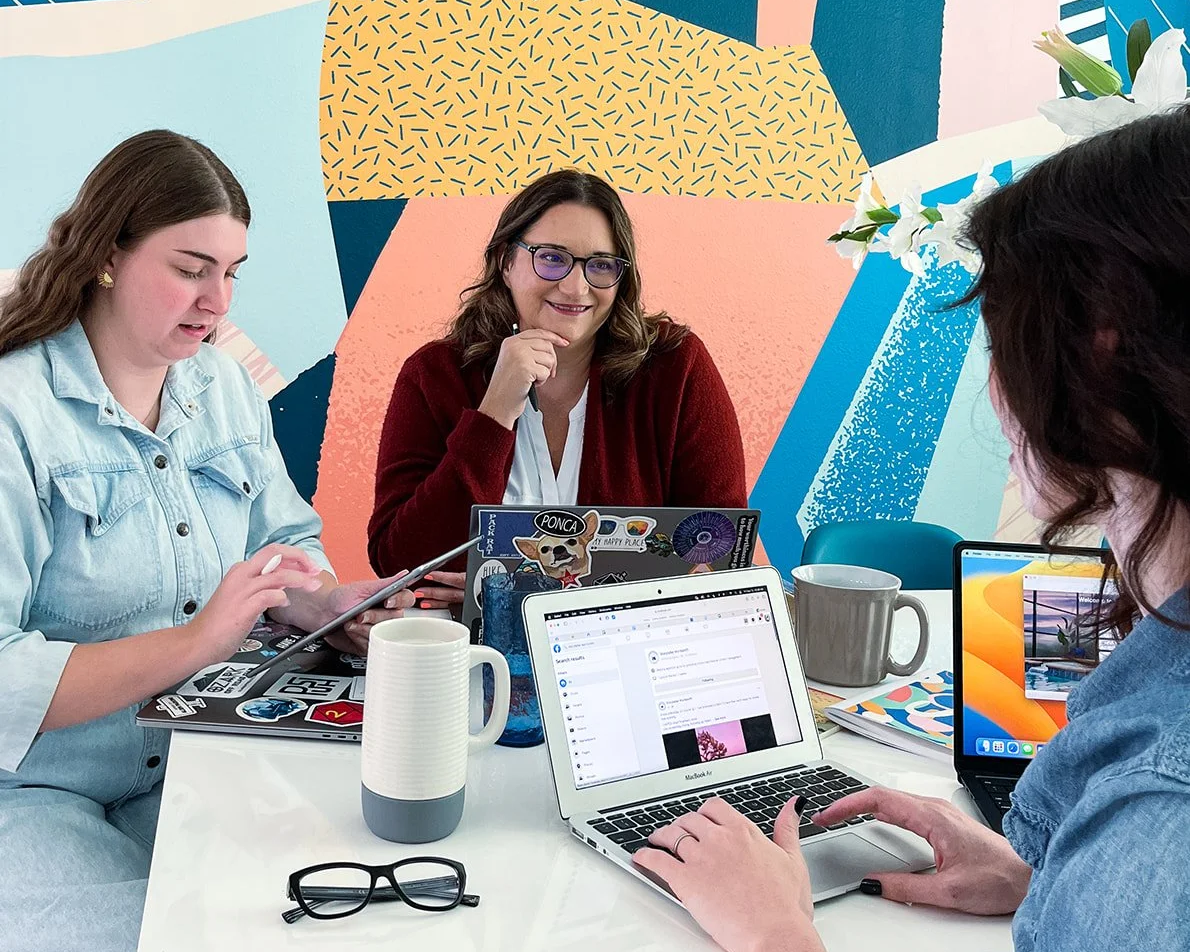
The Storyteller Wordsmith team at work — strategy-first web design for coaches and consultants who are done with sites that don't convert.
If you want to see how we approach it — or figure out where your current site is leaving clients on the table — the Homepage SOS is the fastest way to get eyes on what's working and what's not.
Ready to stop guessing and build something that actually does its job? Let's talk.